Love this. YouTube animation of the infamous conversation between Deleuze and Foucault from 1972 included in Bouchard ed. (1977). The "Comments" aren't your usual YouTube fare.
Thursday, 24 May 2012


Monday, 7 May 2012
Phosphorus: The Next Big Power Conflict
There's a scene in Alan Moore's famous comic book (he resented the term 'graphic novel') between the Batman and the Joker, in the rain, at a deserted funfair. The Joker is walking around and he says:
"Do you know what triggered the last World War? An argument over how many telegraph poles Germany owed its war debt creditors!'
The historical accuracy aside, seemingly small controversies can escalate provided there is enough momentum already gained between the antagonists. Simply put, even telegraph poles can be the straw that caused the camel to go to war.
Phosphorus is critical to phosphate fertilisers, themselves critical to 'global food security' says The London Times in a feature on food miracles (a great summary of the problem and history is here at Business Insider). The richest supplies are in Morocco and China and the latter is now less eager to export it than it used to be. Moreover, that 'India is already almost one hundred percent dependent on imported phosphorus' shows the possible antagonisms that could arise over access to minerals.
China has a plan. The plan is to secure resource access globally. To safeguard resource access, it will develop its military, in order to combat US military hegemonic status, should the US confront it over resources. The United States may assume that China is developing its military in order to assert regional authority but it is something much more precise: China understands that the rise of the Asian populations and their consumerism will lead to turbulence in terms of resource access. Whilst America has spent the last ten years engaged in military confrontation to ensure physical security, China has been engaged in soft power offensives aimed at resource security.
The idea is simple: secure resources for your population and your nation survives. Given the nuclear status of China, conflicts will only erupt at the local level, hence China needs high end military technology and cyberintelligence.
China is already resource wealthy. It possesses supplies of most minerals necessary for US manufacturing, for example. C. Robert Taylor argues that US domestic phosphorus supplies will be exhausted in 15-30 years and that this resource, not oil, will then be the key security factor in US foreign policy. Taylor notes that:
Morocco and China hold 60 percent of the world’s known phosphorus reserves while the U.S., South Africa and Jordan hold most of the rest.
Wisely, China, “has imposed a 100 to 175 percent tariff to curtail phosphorus exports, yet the U.S. continues to export to China. Troubling, ain’t it
Food is key. The reason is obvious. You don't have to kill to survive. You don't have to consume luxury goods to survive. You don't have to have three foreign vacations a year to survive. You don't need to upgrade your home entertainment system to survive or even buy Homeland Series 1 on DVD boxset to survive. But you do have to eat. And if you think that's far fetched, look at what happened to global markets in April 2012 when the cost of Spring Onions and Cabbages in China soared.
"Do you know what triggered the last World War? An argument over how many telegraph poles Germany owed its war debt creditors!'
 |
| The joke is on us. National provisions for populations means safeguarding citizens right to consumerism will create resource conflicts around minerals necessary for foodstuffs. Crazy. |
Phosphorus is critical to phosphate fertilisers, themselves critical to 'global food security' says The London Times in a feature on food miracles (a great summary of the problem and history is here at Business Insider). The richest supplies are in Morocco and China and the latter is now less eager to export it than it used to be. Moreover, that 'India is already almost one hundred percent dependent on imported phosphorus' shows the possible antagonisms that could arise over access to minerals.
China has a plan. The plan is to secure resource access globally. To safeguard resource access, it will develop its military, in order to combat US military hegemonic status, should the US confront it over resources. The United States may assume that China is developing its military in order to assert regional authority but it is something much more precise: China understands that the rise of the Asian populations and their consumerism will lead to turbulence in terms of resource access. Whilst America has spent the last ten years engaged in military confrontation to ensure physical security, China has been engaged in soft power offensives aimed at resource security.
The idea is simple: secure resources for your population and your nation survives. Given the nuclear status of China, conflicts will only erupt at the local level, hence China needs high end military technology and cyberintelligence.
China is already resource wealthy. It possesses supplies of most minerals necessary for US manufacturing, for example. C. Robert Taylor argues that US domestic phosphorus supplies will be exhausted in 15-30 years and that this resource, not oil, will then be the key security factor in US foreign policy. Taylor notes that:
Morocco and China hold 60 percent of the world’s known phosphorus reserves while the U.S., South Africa and Jordan hold most of the rest.
Wisely, China, “has imposed a 100 to 175 percent tariff to curtail phosphorus exports, yet the U.S. continues to export to China. Troubling, ain’t it
Food is key. The reason is obvious. You don't have to kill to survive. You don't have to consume luxury goods to survive. You don't have to have three foreign vacations a year to survive. You don't need to upgrade your home entertainment system to survive or even buy Homeland Series 1 on DVD boxset to survive. But you do have to eat. And if you think that's far fetched, look at what happened to global markets in April 2012 when the cost of Spring Onions and Cabbages in China soared.
Wednesday, 25 April 2012
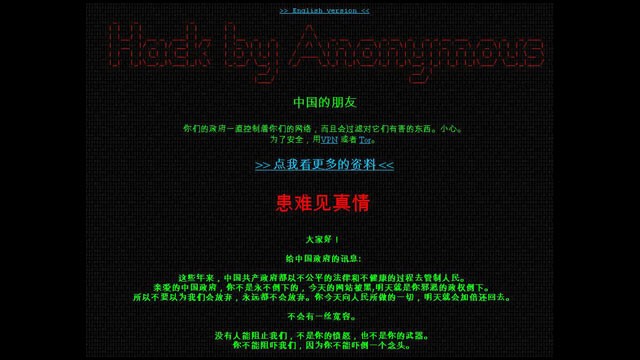
Cry Havoc, and let loose the forces of Anonymous
Of course, it makes good sense.Some individuals or groups are collaborating as Anonymous and hacking sites containing sensitive data. Earlier this month it launched DDoS attacks against the UK Home Office's website.
So of course, it makes sense. Earlier this month Anonymous launched attacks against Chinese sites. Its "Anonymous China" twitter feed proclaimed, "Dear Chinese government, you are not infallible." And provided those who accessed it information on anti-censorship programmes.
So of course it makes sense. The American government has been the main target of Anonymous so its important to stress a new, more malicious enemy.
So of course, it makes sense. China's hunger for corporate espionage is harming America, claimed Richard Falkenrath, Former Deputy Homeland Security Advisor to the White House. Right wing conspiracy theorists see the RQ-170 drone lost over Iran as being brought down by a Chinese cyberunit, or more generally, just the Chinese.
So of course it make sense. Adam Segal, writing April 20, 2012 in Foreign Policy, argues Anonymous should attack five key Chinese websites. It's not us, it's them, is Segal's tone - China has the really good secrets.

So of course, it makes sense. Earlier this month Anonymous launched attacks against Chinese sites. Its "Anonymous China" twitter feed proclaimed, "Dear Chinese government, you are not infallible." And provided those who accessed it information on anti-censorship programmes.
So of course it makes sense. The American government has been the main target of Anonymous so its important to stress a new, more malicious enemy.
So of course, it makes sense. China's hunger for corporate espionage is harming America, claimed Richard Falkenrath, Former Deputy Homeland Security Advisor to the White House. Right wing conspiracy theorists see the RQ-170 drone lost over Iran as being brought down by a Chinese cyberunit, or more generally, just the Chinese.
So of course it make sense. Adam Segal, writing April 20, 2012 in Foreign Policy, argues Anonymous should attack five key Chinese websites. It's not us, it's them, is Segal's tone - China has the really good secrets.
Sunday, 22 April 2012
Afghanistan end-game
Much has been written and talked about regarding what the end game in Afghanistan looks like. Today the US and Afghanistan have finalised their strategic partnership arrangement.
Very much it's reminiscent of the CCCP's withdrawal from Afghanistan when it continued to give massive financial aid to shore up the regime, successfully. When the aid stopped, the regime was toppled.
The NYT reports:
However, the United States is already anticipating that it will make a substantial contribution toward paying for Afghanistan’s security forces beyond 2014 and is searching for contributions from its NATO partners. The amount is not settled but a figure of $2.7 billion a year has been under discussion. There would be additional foreign aid for civilian fields.
Which is similar to the Russian's annual aid back in the early 1990s. Not so much nation-building, as regime-propping. Offshore balancers are in the ascendency in terms of fashionable thought and with good reason after the confused aims and utopian ideals cited in the Iraq and Afghan invasions.
So where are we? When Russia left Afghanistan, it ranked 170 out of 174 in the UNDP's Human Development Index (Barakat, S. (2004). Reconstructing war-torn societies: Afghanistan. New York: Palgrave Macmillan (p.7)).
Very much it's reminiscent of the CCCP's withdrawal from Afghanistan when it continued to give massive financial aid to shore up the regime, successfully. When the aid stopped, the regime was toppled.
The NYT reports:
However, the United States is already anticipating that it will make a substantial contribution toward paying for Afghanistan’s security forces beyond 2014 and is searching for contributions from its NATO partners. The amount is not settled but a figure of $2.7 billion a year has been under discussion. There would be additional foreign aid for civilian fields.
Which is similar to the Russian's annual aid back in the early 1990s. Not so much nation-building, as regime-propping. Offshore balancers are in the ascendency in terms of fashionable thought and with good reason after the confused aims and utopian ideals cited in the Iraq and Afghan invasions.
So where are we? When Russia left Afghanistan, it ranked 170 out of 174 in the UNDP's Human Development Index (Barakat, S. (2004). Reconstructing war-torn societies: Afghanistan. New York: Palgrave Macmillan (p.7)).
In 2001 in ranked 89 of 90 in a UNDP Human Poverty Index using various indicators. In 2006 it conspicuously did not feature on the numbered tables, being considered in separation to that with other states lacking enough data. In 2011, it ranked 172 out of 187 (Democratic of Congo was in last place, probably justifying even greater faith into the theory of Resource curses now that globalization has opened up the world's resources to all markets). There can be no doubt, given the numerous documentaries that have emerged, that Western forces went there to do good, to nation-build, to conduct counter-insurgency. But this was war, with resistance, and there was never a post-conflict setting, never a time when the resistance had subsided to such an extent that nation-building could begin. Defence won out over offence.
Subscribe to:
Posts (Atom)